A sharp move in gold can happen while the U.S. dollar is falling. Oil can rally on a supply headline, then reverse after inventory data. That is the appeal of commodity trading: it gives traders a direct way to respond to real-world forces that are often visible in daily headlines. It is also why trading commodities without a clear process can become expensive very quickly.
- What Commodity Trading Really Means
- The Forces That Move Commodity Prices
- Supply shocks can move a market in minutes
- Demand tells the economic story
- The dollar and interest rates matter
- Commodity Trading for Forex Traders
- A Practical Process Before Entering a Trade
- The Risks Many Traders Underestimate
- Build an Edge Through Context, Not Predictions
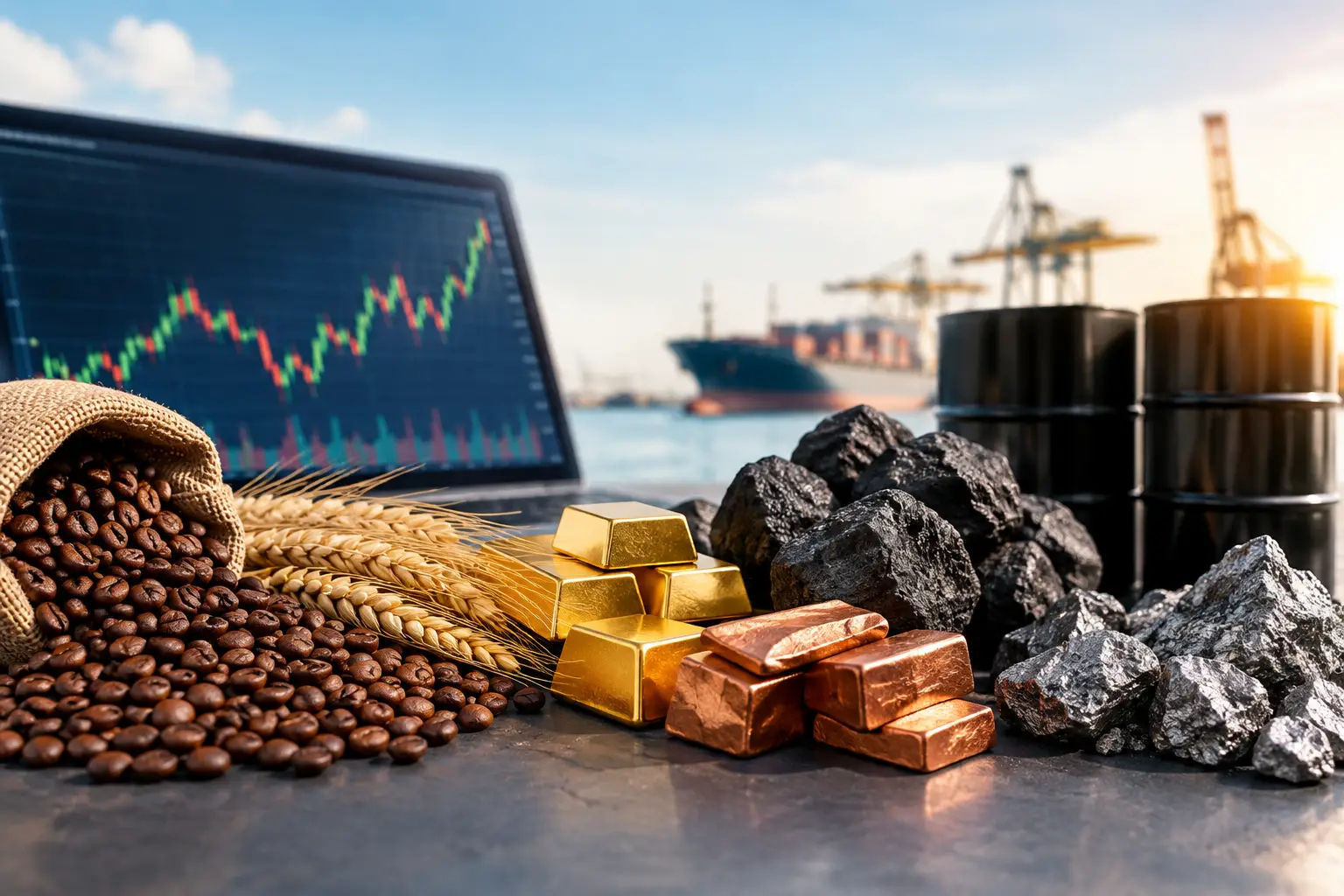
For forex traders, commodities are not a separate universe. Gold, crude oil, natural gas, copper, wheat, and coffee react to interest rates, inflation, economic growth, geopolitics, and currency strength. The difference is that each market has its own supply-and-demand story underneath the chart.
What Commodity Trading Really Means
Commodity trading is the buying and selling of raw materials or financial products tied to their prices. A trader is not usually arranging delivery of barrels of oil or a truckload of wheat. Instead, they use instruments designed to gain or lose value as the underlying commodity price changes.
The most common routes are futures contracts, exchange-traded funds, options, and, in some jurisdictions, contracts for difference. U.S. retail traders should know that CFDs are not permitted for retail customers in the United States, so futures, options, and funds are more common choices. Each product changes the risk profile, required capital, and trading flexibility.
A futures contract is an agreement linked to a specific commodity and expiration date. It offers efficient exposure, but leverage can magnify losses as fast as it magnifies gains. An ETF may be easier for an investor to access through a stock account, although its performance can differ from the spot commodity price because of fund fees, futures roll costs, or the basket it holds.
This distinction matters. Saying “I am bullish on oil” is only a market view. Choosing how to express that view is a risk-management decision.
The Forces That Move Commodity Prices
Charts show the result. Prices move because traders constantly revise their expectations for future supply, demand, and financial conditions.
Supply shocks can move a market in minutes
Energy and agricultural commodities are especially exposed to supply disruptions. Production cuts, refinery outages, shipping problems, weather damage, sanctions, and conflict can all reduce expected availability. Oil is a clear example: a headline involving a major producing region can create an immediate reaction before traders have all the facts.
But the first move is not always the lasting move. A temporary disruption may cause a spike, while a prolonged production loss can change the broader trend. Traders need to ask whether a headline changes the actual supply balance or simply creates short-term uncertainty.
For agricultural markets, weather can matter as much as central-bank policy matters in forex. Drought, flooding, frost, and poor planting conditions may affect crops months before the final harvest data confirms the damage. That makes seasonal patterns useful context, not a guaranteed trading signal.
Demand tells the economic story
Copper is often watched as a barometer of industrial activity because it is used in construction, manufacturing, and electrification. Crude oil demand is influenced by transport, factory output, and consumer activity. Gold demand includes jewelry and central-bank buying, but its price is also shaped by investment demand during periods of uncertainty.
When economic data suggests slowing growth, traders may sell commodities linked closely to industrial production. Yet the reaction depends on the market. Weak growth can hurt oil demand while supporting gold if investors seek defensive assets. One macroeconomic headline can push different commodities in opposite directions.
The dollar and interest rates matter
Many major commodities are priced in U.S. dollars. When the dollar strengthens, commodities can become more expensive for buyers using other currencies, which may pressure demand. When the dollar weakens, the opposite can happen. This relationship is common, but it is not a rule that works every day.
Gold is particularly sensitive to real yields and interest-rate expectations. When yields rise, holding a non-interest-bearing asset such as gold can become less attractive. But risk aversion, inflation concerns, or heavy central-bank demand can overpower that relationship. Traders who rely on one correlation without checking the larger market context often get caught on the wrong side of a reversal.
Commodity Trading for Forex Traders
Forex traders already understand several skills that transfer well: reading economic calendars, managing leverage, identifying trend structure, and protecting capital with defined risk. The adjustment is learning the specific catalysts behind each commodity.
Gold, often quoted as XAU/USD, is the most familiar starting point for many currency traders. It is highly liquid and responds to U.S. inflation data, Federal Reserve expectations, Treasury yields, dollar direction, and geopolitical risk. However, its volatility around major data releases can be aggressive. A tight stop placed without regard for normal market range may be hit even when the broader trade idea is correct.
Oil requires attention to inventory reports, production decisions, refinery activity, and global demand forecasts. Copper requires a closer look at manufacturing data and major consumer demand. Natural gas has its own weather-driven personality, where forecasts can change sentiment quickly.
Instead of trying to monitor every commodity, choose one or two markets and learn their rhythm. Know the scheduled reports that matter, the usual active trading hours, and the price levels that institutions are watching.
A Practical Process Before Entering a Trade
A disciplined commodity trade begins before the chart pattern appears. Start by defining the catalyst. Is gold moving because markets are repricing rate cuts? Is oil reacting to an inventory number? Is the move driven by a broad trend or a single headline?
Then check the higher-time-frame structure. A bullish breakout on a 15-minute chart has less value if the daily chart is approaching major resistance after an extended rally. The same principle applies to bearish setups near long-term support.
Next, decide where the trade idea is invalidated. This is more useful than choosing a stop-loss level based only on how much money feels comfortable to lose. If price breaks below a key swing low, for example, the bullish structure may no longer be valid. Position size should then be calculated from that logical stop distance, not the other way around.
Finally, check the calendar. Holding a leveraged oil position minutes before a major inventory report is not the same as holding it on a quiet session. Neither choice is automatically wrong, but the risk must be intentional. If the potential volatility exceeds your plan, reduce size or wait for the release.
The Risks Many Traders Underestimate
Commodity markets can gap, especially after geopolitical developments or weekend news. Stops help manage risk, but they do not guarantee an exact exit price in every fast market. Futures contracts also have expiration dates, margin requirements, and contract specifications that must be understood before placing an order.
Another issue is concentration. A trader may believe they are diversified because they hold gold, silver, and a mining-stock fund. In a strong dollar or rising-yield environment, all three may face similar pressure. Likewise, multiple energy positions can become one oversized bet on oil prices.
Leverage is the most common danger. Small contract movements can represent meaningful dollar changes, and a position that looks manageable at entry can become emotionally difficult after a fast reversal. Risking a modest, predetermined percentage of trading capital per position keeps one volatile session from becoming a major setback.
Avoid treating commodities as a shortcut to easy profits when inflation or geopolitical headlines dominate the news. The most dramatic stories usually attract the most crowded trades.
Build an Edge Through Context, Not Predictions
No trader needs to predict the exact price of gold, oil, or wheat next month. A more realistic goal is to identify situations where the market narrative, technical structure, and risk-reward setup align.
Keep a simple journal for each commodity trade. Record the catalyst, the higher-time-frame trend, entry reason, stop placement, and what happened after the trade closed. Over time, this reveals whether your best setups come from breakouts after data releases, pullbacks within established trends, or reversals after exaggerated headlines.
Commodity trading rewards traders who respect both the chart and the real economy behind it. Watch the levels, know the catalyst, size the position carefully, and let disciplined execution matter more than the excitement of the headline.